How to Buy a Plumbing Business Without Buying Its Dispatch Dependence
The multiple quoted for plumbing is a platform EBITDA number, not the owner-operator's. Here is the buyer's pre-bid read, and the 2 a.m. dispatch judgment you should not inherit blind.
The multiple a broker mentions over coffee is the wrong number to bid a plumbing shop off, and the thing that should set your price never shows up on the P&L.
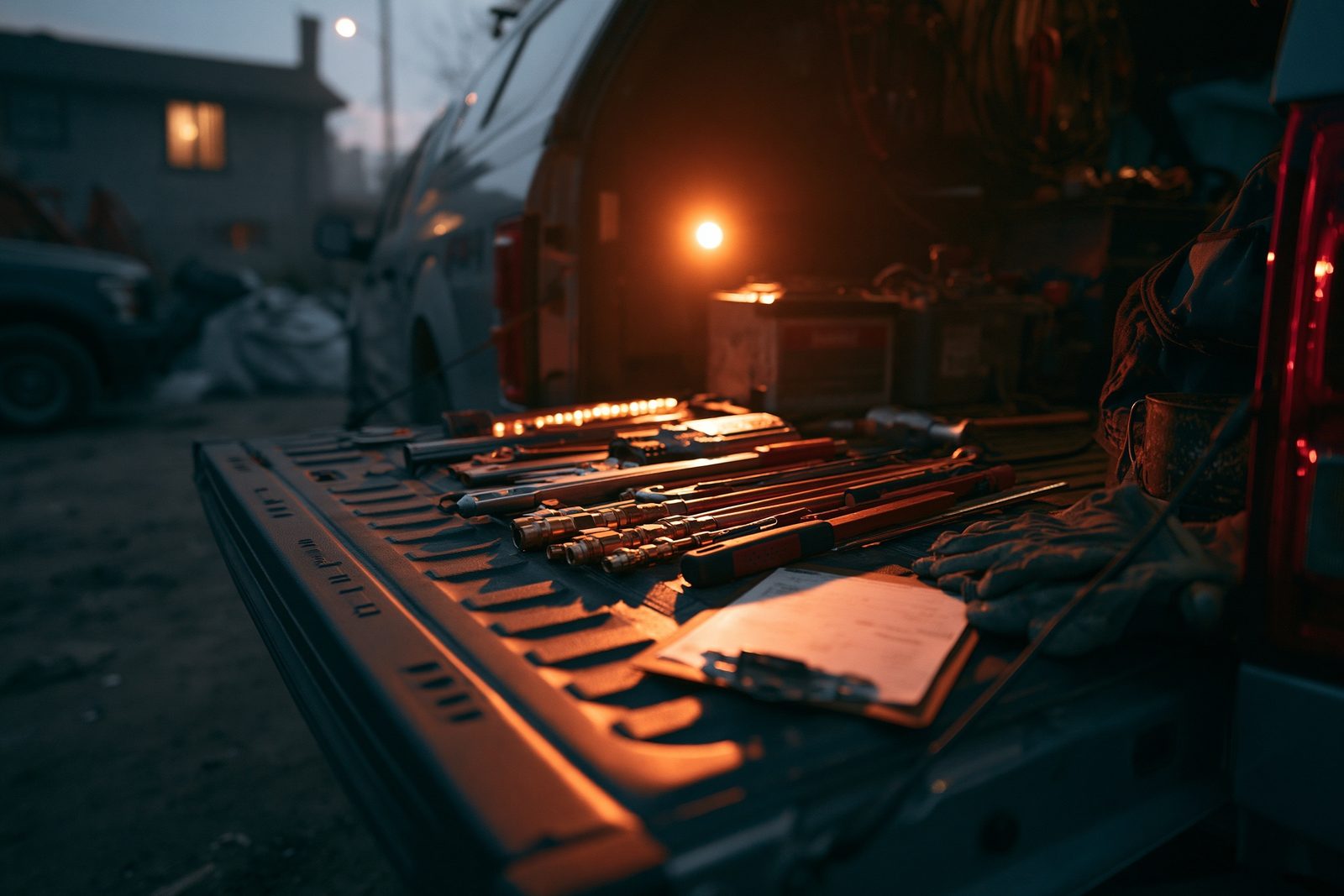
It's 2 a.m., the first hard freeze of the winter, and the phone on the nightstand is ringing. Until closing it was the seller's phone. Now it's yours, because nobody told you the after-hours dispatch was him.
He decided which emergency calls were worth taking, sent the right tech, and priced the job under pressure. That judgment was the business, and it left when he did.
So two things matter before you bid. Anchor to the SDE number. And price in the dispatch chair.
What you should actually expect to pay
Anchor to the SDE multiple, not the platform EBITDA multiple. Plumbing maps to the Service bucket, and a buyer prices it on whether the business runs without the current owner.
That platform number the broker quoted is an EBITDA multiple a consolidator pays to buy scale. It's real, and it belongs to the consolidator.
Here's the honest anchor, the canon Service-bucket SDE range by size band:
| SDE band | Service-bucket SDE multiple range |
|---|---|
| Under $100K | 1.3x to 2.3x |
| $100K to $250K | 1.9x to 2.5x |
| $250K to $500K | 2.4x to 3.2x |
| $500K to $1M | 2.9x to 3.9x |
| $1M+ | 3.5x to 4.5x |
Those are Main Street SDE multiples calibrated against a decade of closed deals, with an all-industry median near 2.0x to 2.5x SDE. The platform multiple lives in a different market with a different buyer.
Take a shop doing $1.3M in revenue with roughly $350K SDE, which puts it in the $250K to $500K band. Where a given shop lands inside its band has little to do with revenue. It comes down to whether the dispatch judgment and the customer demand belong to a system or to the seller.
(This post is the trade read. For the buying method itself, see how to buy a small business as a screening discipline.)
The lender's view is in your favor
Plumbing sits in the Service bucket, and Service sits at the low-risk end of the SBA charge-off ordering. Professional services and service businesses anchor the low end of realized SBA charge-offs, while food service and retail anchor the high end.
If you're using SBA money, that's a margin-of-safety read. A lender is more comfortable in a trade with a lower charge-off history, which is one reason plumbing deals tend to get financed.
But it's a confidence read. The tier tells you the financing is more likely to come together. It doesn't lower what you should pay or what the business is worth. For the money side, here's how to finance the purchase and build the stack.
Test the dispatch chair
So what do you look for? Whether after-hours dispatch is a documented system or the seller's gut.
If the owner decides which emergency calls to take, who goes, and what to charge at 2 a.m., you're buying a key-person risk the P&L never shows. A shop can have clean books and a steady customer list and still run entirely on one phone after dark. That's the part you most need to underwrite.
Before you bid, find out:
- Who answers after hours. Do emergency calls route through a documented system and an on-call rotation, or through the owner's personal cell?
- Who decides which calls to take. Is there a written standard for triaging emergencies, or does that live only in the owner's head?
- Who prices under pressure. Can the techs quote an after-hours job to a standard, or does the owner set the price call by call?
- What the revenue mix looks like. How much is repeatable service work, and how much is lumpier new construction that runs on the owner's relationships?
That last one tells you how durable the demand is. Service-heavy plumbng carries more repeat demand. New-construction revenue is lumpier and tends to ride on the owner's personal relationships.
You can underwrite a documented dispatch system and a service-heavy book. You have to discount the owner's phone and a project pipeline that renews on a handshake, because both leave with the seller. There's more on what a plumbing business is really worth and the decisions behind the number.
Run the numbers before you bid
The independence discount has a number, and it's big. Scale it up to a larger shop: on a $510,000-SDE business, the gap between a shop that runs on its owner and one that doesn't is $943,500.
That's your whole pre-bid question. A plumbing business where dispatch runs on a system earns the higher multiple, and one that runs on the owner's after-hours judgment gets the lower one. Most sellers won't know which they are, since 86% of owners arrive with no professional valuation or only a rough estimate.
So price it yourself. Keystone is built for that read, but it's closed while the build finishes. When it opens, the diagnostic takes about four minutes and gives you three scores and your value range with the most likely figure locked, so you can see where the business actually sits.
Join the waitlist at https://app.trykeystone.io.
Once you're in, the specific deal goes through Keystone Command and its Deal Analyzer. It works the adjusted SDE, the fair-value check against the Service-bucket range, the SBA affordability math, and the red-flag report, so you're bidding off the real number and the real risk.
Comparing a plumbing target against other trades? What your trade is worth lines up all nine medians side by side, so you can see which ones you're really paying a premium for.
FAQ
How much is a plumbing business worth?
An owner-operated plumbing business sells at a low-single-digit SDE multiple, with a typical $250K to $500K SDE business landing in the 2.4x to 3.2x range. The higher multiple quoted elsewhere is an EBITDA platform number for roll-ups, not the owner-operator's.
Is buying a plumbing business profitable?
Plumbing maps to the Service bucket, which sits at the low-risk end of the SBA charge-off ordering, so acquisition financing tends to clear. Profitability after the sale depends on whether dispatch runs on a system or on the owner who is about to leave.
What should I check before buying a plumbing company?
Test the dispatch chair first. Confirm whether after-hours calls route through a documented system and an on-call rotation, or through the owner's personal phone, and whether the revenue mix is repeatable service work or lumpier new construction.
How do I finance buying a plumbing business?
Plumbing's low-risk SBA tier makes acquisition financing more likely to come together, which is a confidence read, not a discount. Build the financing stack around the verified SDE and price the dispatch dependence in before you bid.
Your business, not the general case
You just read what moves the number. This reads yours.
18 questions, about 4 minutes. Three scores, a profile label, and your value range with the most likely figure locked until you upgrade.
Join the waitlistPrefer to start on your own, for nothing? The operator library is twelve tools, free to download.
The Main Street Operator covers the operating mechanics behind business value: what buyers actually pay for, what discounts a business, and the month-by-month decisions that compound.